Five hundred dollars for a launch monitor that records your swing on every shot and unlocks 42,000 virtual golf courses. That is the Garmin R10. The price sounds like a mistake. It is not.
Prices were checked at the time of writing and may change. Check the retailer for current pricing.
This coverage draws on manufacturer specifications, published performance data, and what real owners report from using this unit.
QUICK VERDICT
- Best for: Budget-conscious golfers who want E6 Connect and 42,000 courses at home
- Key strength: $499 entry price with a full course library via subscription
- Key weakness: Radar accuracy drops indoors without a proper net setup
- Price: $499
- Bottom line: The most accessible path into golf simulation for recreational players who do not need professional-grade club data.
What You Actually Get for $499
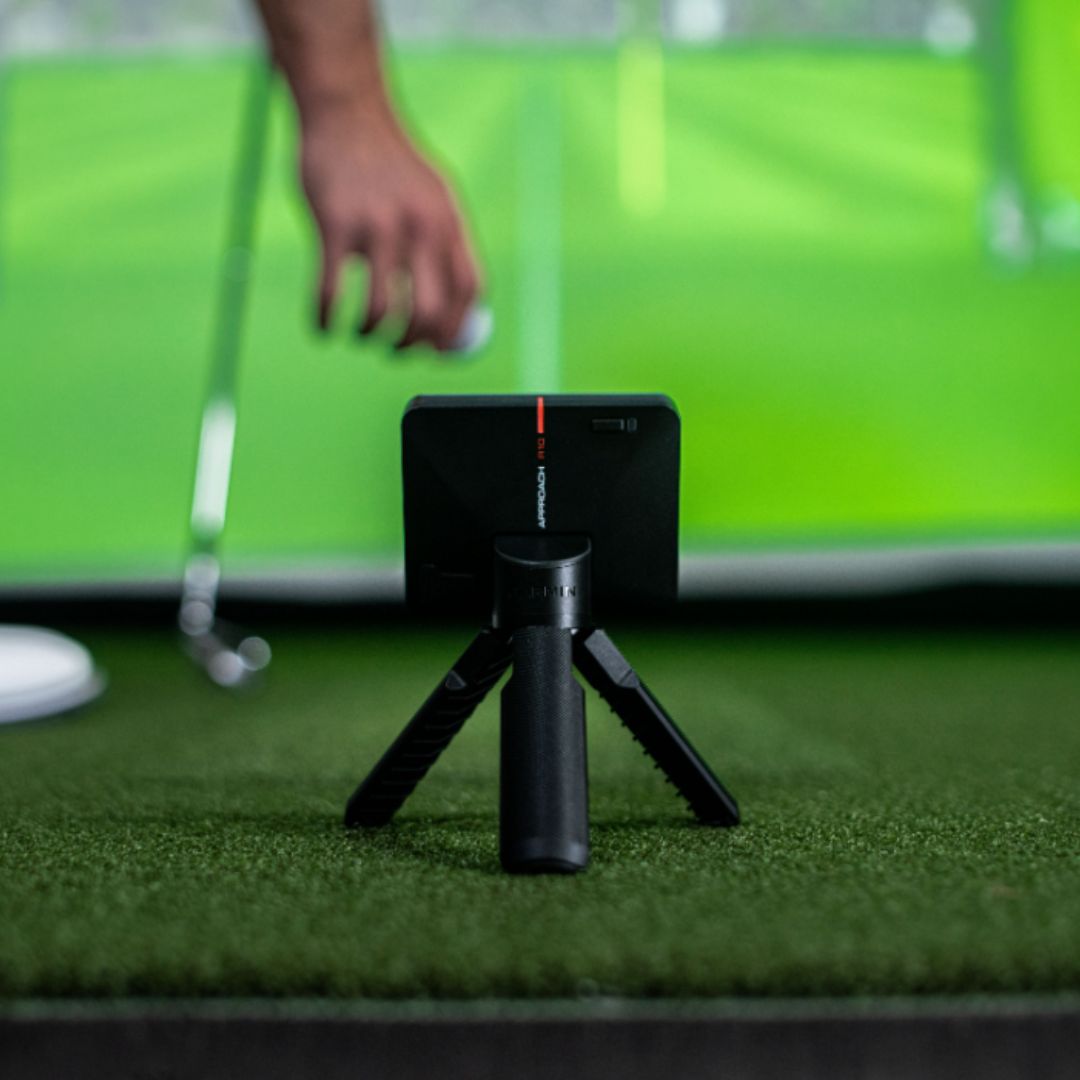
The R10 tracks over 12 ball and swing metrics per shot, including ball speed, launch angle, club head speed, smash factor, carry distance, and shot shape. Every single swing is recorded automatically as video. The device pairs via Bluetooth, sits about 8 feet behind you on a small tripod, and is ready to hit in under 5 minutes. No PC, no ceiling, no installation.
The 42,000-plus course library is real, but it requires a Garmin Golf app subscription to access. That ongoing cost is worth factoring into your total budget from the start. E6 Connect is also compatible, with 5 free courses for iOS users, so you have simulation options even before committing to the subscription.
- Technology: Doppler radar
- Mount position: Behind the golfer, approximately 8 feet back
- Tracked metrics: 12-plus swing and ball flight metrics
- Video: Records every swing automatically
- Virtual courses: 42,000-plus (Garmin Golf subscription required)
- Battery life: Up to 10 hours
- Price: Approximately $499
Where It Shines
At the range or outdoors, the R10 is excellent. Radar works best when the ball travels its full flight path, and that is exactly what happens on the range. Ball speed and carry distance readings are reliable, shot shape tracking shows your true fade and draw tendencies over time, and the automatic video gives you something to watch alongside the numbers.
The portability is worth taking seriously. This thing goes in a bag, runs for 10 hours without a charger, and is live in minutes wherever you set it up. If you practice across multiple spots or want one device for both outdoor range sessions and an indoor net, the R10 handles that without asking you to compromise.
The Indoor Catch
Spin accuracy indoors is where radar monitors show their limits, and the R10 is no different. When the ball hits a net or screen before completing its flight, the radar has less data to work with and spin numbers become less reliable. For long game practice indoors, ball speed and launch angle are still solid. For wedge and short iron sessions where spin is the whole point, a camera-based monitor gives you better readings.
The R10 also does not capture club path or face angle data beyond club head speed. If you want to understand your swing shape in detail, the step up to the R50 adds those parameters. For pure ball flight feedback and simulation at $499, the missing club data is an acceptable trade-off for most golfers.
Who Should Buy It, Who Should Skip It
Buy the R10 if: you want real launch data and virtual course play at the lowest price on the market, you primarily practice outdoors or at the range, and you want one device that travels anywhere without needing a dedicated setup.
Skip it if: your main goal is an accurate indoor simulator where spin matters, you want GSPro compatibility (the R10 does not support it natively), or you need club path and face angle data for your practice. All of those things exist, but they cost more.
How It Compares
The Rapsodo MLM2Pro at $699 is the main alternative at this price range. It adds swing video and a camera-based hybrid system that handles indoor spin better than the R10's radar. If swing video alongside your data matters most, the MLM2Pro is worth the extra $200. If you want a larger course library and pure portability, the R10's 42,000-course access via Garmin Golf tips the balance back.
The FlightScope Mevo Gen2 at $1,299 sits at the next tier. It delivers 3D Doppler radar with E6 Connect included at no extra cost, more reliable indoor accuracy, and a broader parameter set. For golfers who can stretch the budget, the Gen2 is a meaningful step up. For those who cannot, the R10 covers the fundamentals at less than half the price.
The Square Golf Home at $699 targets a different buyer: someone who wants indoor camera tracking with no subscription. If you will never use a launch monitor outdoors and want courses included permanently, the Square Golf Home makes sense. The R10 wins on portability, outdoor accuracy, and course library size.
Common Questions
Does the R10 work without a subscription?
Basic shot data works without a subscription. Access to the 42,000-plus course library and simulation features requires an active Garmin Golf subscription. E6 Connect includes 5 free courses for iOS users without an additional subscription charge.
How much space do I need behind the ball?
About 8 feet of clear space behind the ball for the radar to function properly. Most garages and basements with 15-plus feet of depth handle this without any rearranging.
How does it compare to the Garmin R50?
The R50 adds club path data, face angle, and improved consistency across all metrics at approximately $999. For golfers focused on understanding their swing shape, the upgrade is worth it. If you want ball flight data and simulation at the lowest price, the R10 is the right starting point.
Can you use the R10 with GSPro?
No, not natively. The R10 connects to the Garmin Golf app and E6 Connect. For GSPro, look at camera-based monitors like the SkyTrak or Square Golf Omni instead.
Bottom Line
The Garmin R10 is the best entry point in golf tech. At $499, the combination of real launch data, automatic swing video, 10-hour battery, and access to 42,000 virtual courses is unmatched at this price. Know its indoor spin limits going in, factor the subscription cost into your total, and it will likely surprise you with how much it covers.