Prices were checked at the time of writing and may change. Check the retailer for current pricing.
This coverage draws on manufacturer specifications, published performance data, and what real owners report from using this equipment.
Small-space simulator builds fail more often than people expect, and almost always for the same reasons: the ceiling is too low for the monitor they bought, or the radar unit needs 8 feet of depth behind the ball that the room does not have. If you pick the right monitor for your specific constraints from the start, a small room becomes a perfectly functional simulator space. If you pick the wrong one, you end up with a monitor that cannot track your shots accurately in the space you have.
All five picks on this list are complete packages from Shop Indoor Golf. The monitor, enclosure, and screen are matched and sized to work together. I will walk you through each one, why it makes sense in a small room, and what trade-offs come with it. Run your exact dimensions through the room size calculator first so you know what you are actually working with before you buy.
QUICK VERDICTS
- Best all-around for small spaces: SkyTrak ST Pro. Camera plus radar, sits beside the ball, works in any ceiling height, and delivers serious accuracy.
- Best for photometric accuracy in a tight room: Foresight GC3. Three cameras, floor-level position, no ceiling penalty, no depth requirement.
- Best budget pick that still delivers: FlightScope Mevo Gen2. E6 Connect included, works outdoors too, and leaves budget for a quality enclosure.
- Best overhead for 9 ft ceilings on a budget: Uneekor EYE MINI Lite. Overhead mount, nothing on the floor, more affordable than the full EYE MINI.
- Best overhead system overall: Uneekor EYE MINI. The step up from the Lite with more data, cleaner tracking, and a track record in real commercial builds.
What Matters Most in a Small Space
- Ceiling height: Side-mounted and floor-level monitors (ST Pro, GC3, Mevo Gen2) add no ceiling penalty from the monitor side. What limits you is your swing — most golfers need 9 feet for a full driver, 8.5 feet for irons. Overhead units (EYE MINI, EYE MINI Lite) need 9 feet minimum just for the mount, so total swing clearance becomes critical to calculate.
- Room depth: Radar monitors need 7 to 8 feet behind the ball. Under 14 feet of total room depth, radar becomes problematic. Camera monitors that sit beside the ball (ST Pro, GC3) eliminate that constraint entirely. Overhead units need no depth consideration at all.
1. SkyTrak ST Pro Golf Simulator Package | Best For Any Ceiling Height
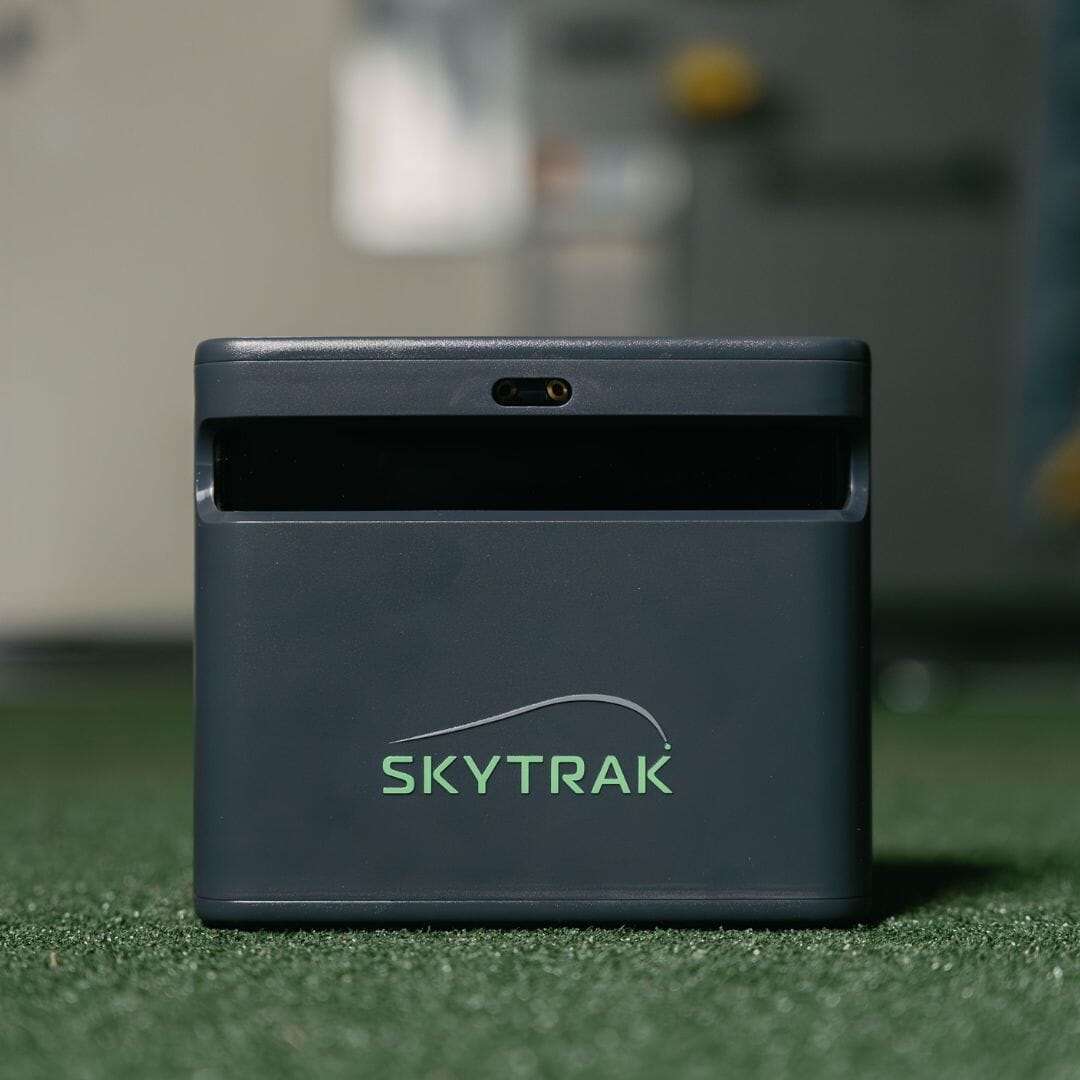
First on my list for small spaces is the SkyTrak ST Pro, and it is here because it handles tight rooms better than almost anything else at its price. The ST Pro sits beside the ball at floor level. It uses a combination of camera and radar technology: cameras capture the ball at impact for spin and launch data, and radar tracks the ball flight for carry and speed. The result is accurate data without the ceiling clearance requirements of an overhead mount and without the depth penalty of a pure radar unit sitting behind your stance.
In a 10-foot-wide room with an 8.5-foot ceiling, the ST Pro is fully workable for iron practice. In a room with a 9.5-foot ceiling, it handles everything including drivers for most golfers. The package pairs the ST Pro with an enclosure sized for simulator use, so you are not guessing at whether the screen and frame fit your space.
The data quality here is worth highlighting. The ST Pro measures ball speed, spin rate, spin axis, launch angle, carry, club speed, club path, face angle, and attack angle. That comprehensive club and ball data set puts it in the same conversation as monitors that cost significantly more. The WGT software integration gives you one of the largest course libraries in simulation.
Serious accuracy at any ceiling height with no overhead install needed.
2. Foresight Sports GC3 Golf Simulator Package | Best For Accuracy
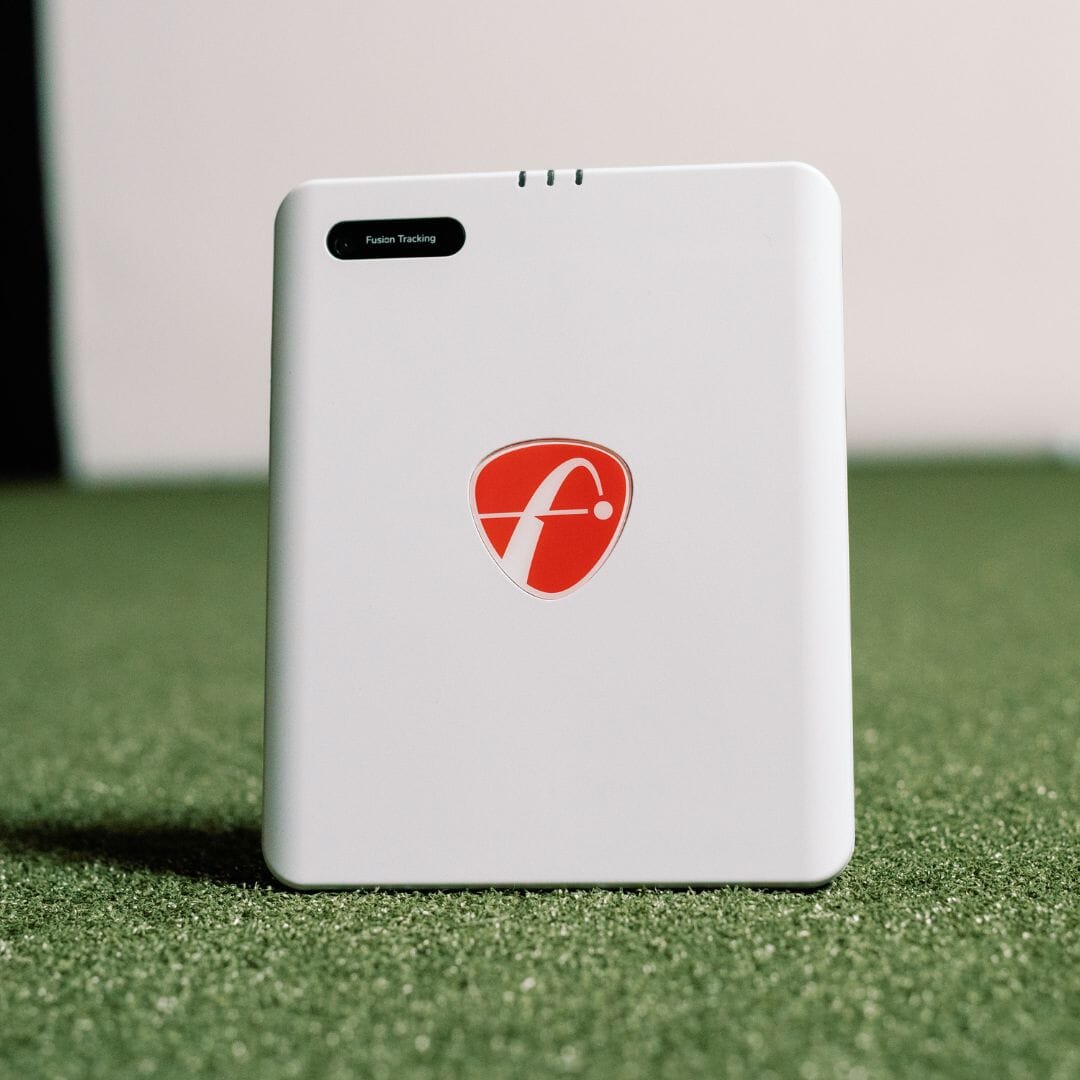
Second on the list is the Foresight GC3, and if accuracy over everything else is your priority in a small room, this is the pick. Three photometric cameras sit beside the ball at floor level and capture the ball at the exact moment of impact. There is no radar involved, which means no depth requirement behind your stance, and no ceiling clearance requirement from the monitor itself. What you get is clean, consistent ball and club data in whatever space you have available.
The GC3 measures 16 parameters including ball speed, spin rate, spin axis, launch direction, carry, club speed, club path, face angle, and dynamic loft. That is data that coaches and clubfitters have trusted in Foresight's photometric systems for years. In a small room where you are mostly practicing irons and wedges, the GC3 gives you feedback that is detailed enough to make real improvements.
The photometric measurement is completely unaffected by the indoor environment, which is what makes it so reliable for year-round small-space use. No calibration drift, no radar bounce issues, no inconsistency from walls being close.
Tight rooms at any ceiling height where accuracy is the top priority.
3. FlightScope Mevo Gen2 Golf Simulator Package | Best For Budget Builds
Third on the list is the FlightScope Mevo Gen2, and this is the pick if budget is a real constraint but you do not want to compromise on the simulator experience. The Mevo Gen2 is a 3D Doppler radar unit that sits behind the ball, and it comes with E6 Connect included in the package. That means from day one you are playing virtual courses without an extra software purchase. For a small-space setup where the goal is realistic practice and actual course play, that inclusion changes the value equation significantly.
What to know for small spaces: the Mevo Gen2 needs about 7 to 8 feet of space behind your stance for the radar to track cleanly. In a room that is 16 feet or deeper, that works fine. In a room under 14 feet deep, you start cutting into your tee-to-screen distance in a way that gets uncomfortable. If your room is on the shallower side, the ST Pro or GC3 (which sit beside the ball) are more appropriate. But if you have the depth, the Mevo Gen2 is a great package for the money.
The Mevo Gen2 is also portable. You can take it to the driving range, use it in the backyard, and bring it back to the simulator setup. That flexibility makes it the right pick if you want one monitor that handles both the indoor build and outdoor range sessions.
Budget builds in rooms 15 feet or deeper, with E6 Connect from day one.
4. Uneekor EYE MINI Lite Golf Simulator Package | Best For Overhead on a Budget
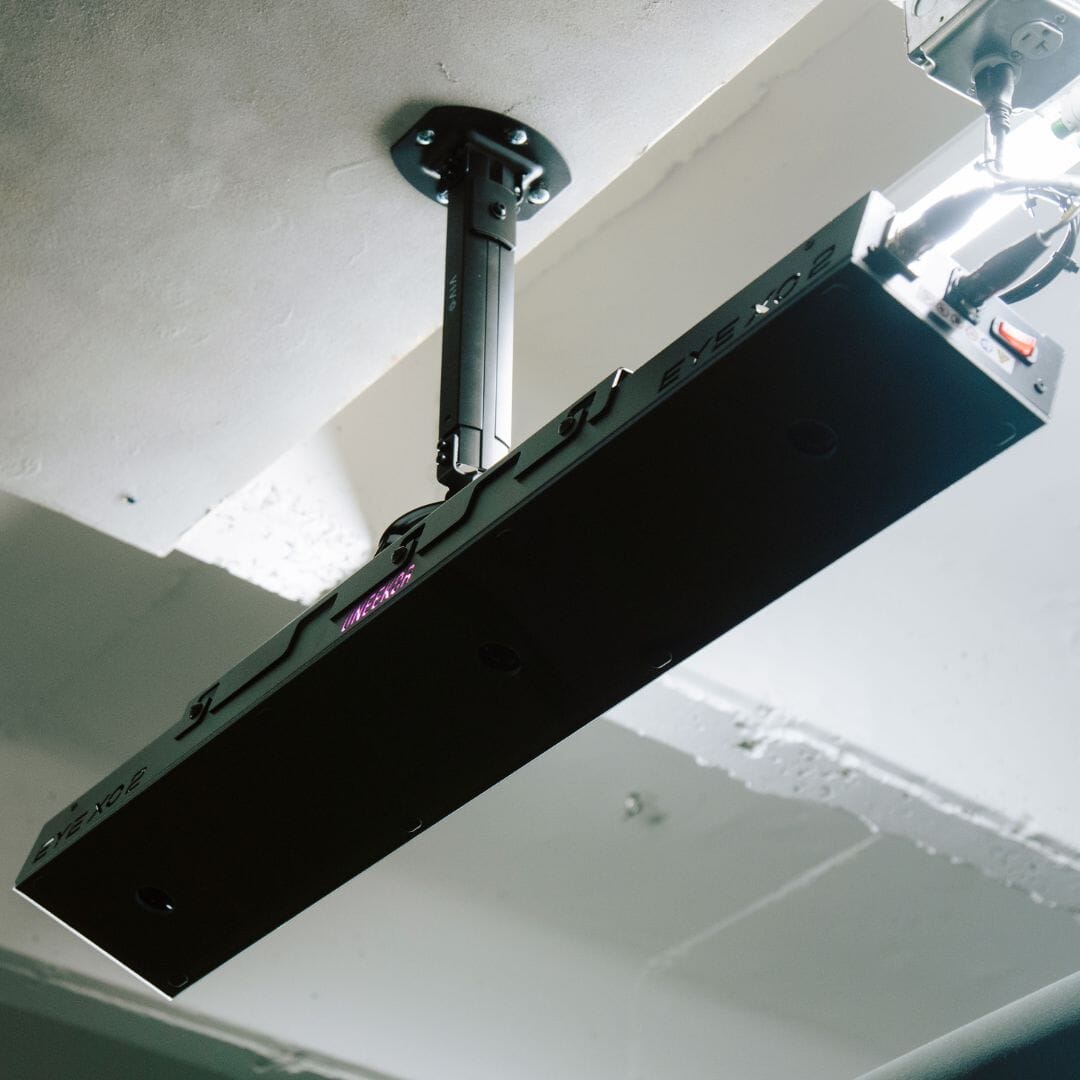
Fourth is the Uneekor EYE MINI Lite, and this one is for a specific buyer: someone with at least 9 feet of ceiling height who wants a permanent overhead installation and wants to keep the floor of their sim bay completely clear. The EYE MINI Lite mounts to the ceiling above the hitting area. Nothing sits beside the ball, nothing sits behind you. The entire floor is open. For a small room where every square foot matters, that overhead position frees up space in a way a floor-level monitor cannot.
The Lite version is Uneekor's more accessible entry point into the EYE MINI line. It delivers ball speed, spin, launch angle, carry, and the core data parameters you need to practice and play simulation. What it trades off compared to the full EYE MINI is some of the advanced club data parameters and tracking resolution. For a recreational golfer who wants a clean permanent install and solid ball flight data in a tight space, the Lite is a smart buy that leaves money for the rest of the build.
One practical advantage in small rooms: because the EYE MINI Lite is overhead, it tracks naturally for both right and left-handed golfers from the same installation with no reconfiguration.
9-ft ceilings, permanent overhead install, floor stays completely clear.
5. Uneekor EYE MINI Golf Simulator Package | Best Overhead System Overall
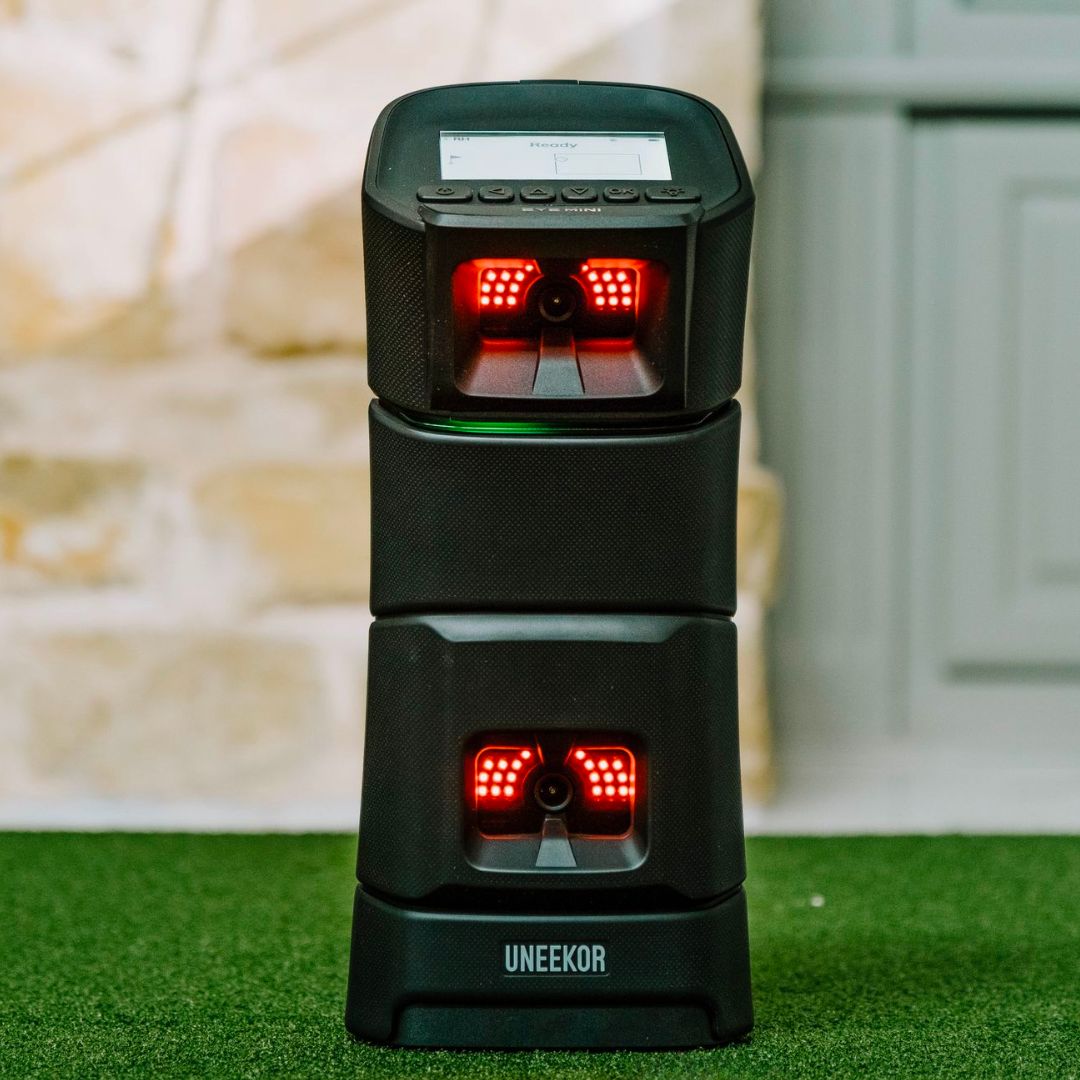
Fifth on the list is the full Uneekor EYE MINI, and this is the step up from the Lite that delivers more. Where the Lite gives you core ball flight data, the EYE MINI adds detailed club data: club speed, path, face angle, attack angle, and impact location on the face. That club data layer is what separates a practice tool from a full coaching and improvement system. If you are going to build a permanent small-space simulator that you use seriously for years, the full EYE MINI is the version that holds up to that use case.
Like the Lite, the EYE MINI mounts overhead and requires 9 feet of ceiling height minimum. Nothing sits on the floor. The hitting area is completely clear. It covers both right and left-handed golfers from one fixed installation. The package pairs the EYE MINI with an enclosure and screen, and the monitor integrates with TGC 2019, Creative Golf 3D, and other leading simulation platforms.
What sets the EYE MINI apart in the overhead camera category is its track record. This unit is used in commercial simulator facilities, not just home builds. The tracking consistency from real-world commercial use translates directly to a home build that runs session after session without issues.
9-ft ceilings where you want full club and ball data from an overhead system.
Making It Work in a Small Room
- Measure to the lowest obstruction, not the ceiling peak: HVAC ducts, beams, and lighting fixtures all reduce your effective swing height. Measure where you will actually be standing and swinging, not across the room.
- Camera monitors are more forgiving in tight rooms: The ST Pro and GC3 sit beside the ball and add zero footprint depth to the setup. If your room is under 16 feet deep, start with one of those rather than a radar unit that sits behind you.
- Enclosure width for small rooms: A SIG8 enclosure is 8 feet 4 inches wide and needs about 10 feet of room width to fit comfortably. A SIG10 is 10 feet 10 inches wide and needs at least 12 feet. Confirm the width against your specific room dimensions with the retailer before ordering.
Frequently Asked Questions
What is the smallest room that can fit a golf simulator?
The practical minimum is roughly 10 feet wide, 10 feet long, and 8.5 feet ceiling height for iron and wedge practice with a camera-based side monitor. For full driver swings, 9.5 feet of ceiling height is the comfortable minimum for most golfers. Use the room size calculator for a personalized clearance check based on your height and clubs.
Can I use a radar launch monitor in a small room?
Yes, but only if the room has enough depth behind your stance. Radar monitors like the Mevo Gen2 need 7 to 8 feet behind the ball. In a room under 14 feet deep, that leaves almost no usable tee-to-screen distance. Camera monitors that sit beside the ball (ST Pro, GC3) are the better choice for shorter rooms.
Do overhead monitors work in small rooms?
Yes, as long as the ceiling is at least 9 feet high. The EYE MINI and EYE MINI Lite actually work well in small rooms because they mount to the ceiling and leave the entire floor clear. The footprint of the simulator bay itself does not change because of the monitor. What you need is ceiling height, not extra floor area.
Which package works best in a room with an 8-foot ceiling?
The SkyTrak ST Pro or Foresight GC3. Both sit beside the ball at floor level, so the monitor itself does not require any ceiling clearance. At 8 feet, full driver swings are risky for most golfers regardless of which monitor you use, but iron and wedge practice is fully functional. The overhead units require 9 feet minimum and are not suitable for 8-foot ceilings.