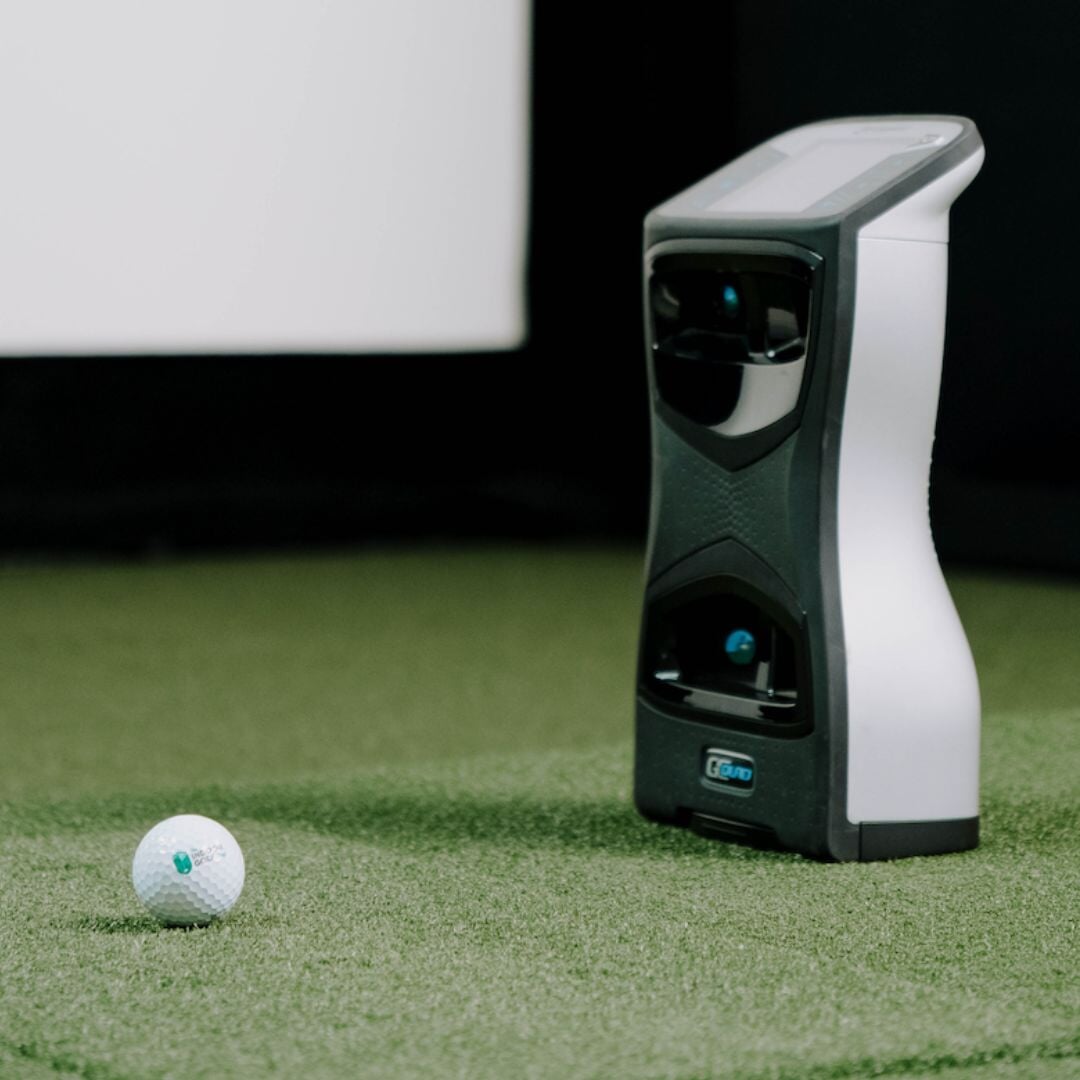
When a professional clubfitter sits down with a tour player or a serious amateur and needs the number to be right, they almost always have a Foresight in front of them. The GCQuad is why. Four high-speed cameras, quadrascopic measurement, full ball and club data, MyTiles turf markers, and one year of Foresight+ Silver. At $19,999, this is not a purchase you stumble into. It is the deliberate choice of someone who has thought hard about what they need and decided that professional-grade accuracy is the non-negotiable factor.
Prices were checked at the time of writing and may change. Check the retailer for current pricing.
This coverage draws on manufacturer specifications, published performance data, and what real owners report from using this unit.
QUICK VERDICT
- Best for: Professional clubfitters and instructors who need the highest photometric data density available
- Key strength: Four high-speed cameras deliver the most comprehensive impact data set of any photometric system
- Key weakness: $19,999 is a professional investment that cannot be justified for most home buyers
- Price: $19,999
- Bottom line: The photometric benchmark that most top fitters rely on, priced accordingly for professional use.
Four Cameras: What the Fourth One Actually Does
The GC3 uses three cameras and delivers excellent data for most applications. The GCQuad uses four. That extra camera is not a marketing spec. It matters specifically at the edges: mishits, heel shots, toe shots, low-spin short game impacts, and any ball struck with unusual launch conditions.
In a recreational practice context, you might not notice the difference much. In a professional fitting context, those edge cases show up constantly. When a fitter is evaluating driver face performance across different impact locations for a client, those heel and toe readings need accurate data, not approximations. When testing wedge grinds around the green, low-spin chip data needs to be real. The fourth camera gives the GCQuad read rate consistency on the full range of shot types that any three-camera system cannot fully match.
MyTiles are small turf inserts that sit in the hitting surface in front of the GCQuad. The cameras use them as reference markers to calibrate and maintain measurement precision session to session. It is a small addition that contributes to the consistency of data over time, particularly in environments where the hitting surface changes or is shared across users.
The FSX Play Ecosystem
The GCQuad works with Foresight's FSX Play simulation software and with third-party platforms including E6 Connect. For high-end home simulators, E6 is one of the top platforms by course quality and physics engine, and GCQuad integration with it is well-established. Many GCQuad owners run E6 as their primary simulation software and use Foresight's own platform for data review and fitting analysis.
One year of Foresight+ Silver is included. After that, a continuing subscription is required for Foresight's platform. At $19,999 hardware, the subscription is not the dominant cost consideration, but it belongs in the total investment math.
GCQuad vs. Trackman 4: The Comparison That Matters at This Price
If you are seriously evaluating the GCQuad, you are also probably looking at Trackman 4. Here is the honest comparison.
Trackman 4 costs $25,995. It uses dual-antenna radar plus camera and has the deepest installed base on tour and in instruction. The GCQuad costs $19,999. It uses four cameras and dominates professional clubfitting.
The technologies suit different professional priorities. Foresight's camera-based approach at impact is what most top fitters prefer for precise impact data: face angle, dynamic loft, and ball spin measured directly at contact. Trackman's dual radar tracks the full 3D ball flight to landing, which is why it is the dominant outdoor instruction tool and the system used in every PGA Tour broadcast.
For a high-end home simulator: both are excellent, and the GCQuad costs $6,000 less. For professional clubfitting: most of the best fitters use Foresight. For outdoor instruction and swing analytics: Trackman's platform is built for that use case in a way Foresight's is not. Neither is better in absolute terms. They are different tools with different professional strengths.
Who Actually Buys a GCQuad
Professional clubfitters who want the most accurate impact data available and need a monitor they can trust for real equipment decisions. High-end indoor facilities that charge session fees and need data quality that justifies the rate. Serious amateurs who have committed to a permanent world-class home simulator and want the same technology their local high-end fitting studio uses. Equipment company R and D teams. High-performance instruction centers that do intensive data-driven coaching and want Foresight's measurement approach.
What the GCQuad is not for: recreational golfers who want to play E6 on weekends and hit a few shots a week. The Rapsodo MLM2PRO at $699.99 or the SkyTrak ST MAX at $2,995 will give a recreational golfer everything they need for home simulation at a fraction of the GCQuad's price. The GCQuad's value lives in its professional measurement precision, which matters for decisions where accuracy has real consequences.
Pros and Cons
Pros:
- Four-camera quadrascopic system: highest read rate consistency on mishits and edge shot types
- Full ball and club data with no add-ons
- MyTiles turf system for session-to-session calibration consistency
- 1 year Foresight+ Silver included
- Compatible with E6 Connect and other major simulation platforms
- Portable, works indoors and outdoors
- The tool most professional fitters choose
Cons:
- $19,999 price rules it out for recreational buyers
- Subscription required after the included year
- Overkill for someone who just wants to play virtual golf at home
How It Compares
The Foresight GC3 at $6,999 uses three cameras and delivers excellent ball and club data for the vast majority of golfers and home simulator applications. The GCQuad's fourth camera adds read rate consistency on heel shots, toe shots, and low-spin short game impacts that matter in professional fitting volume. For personal use or instruction, the GC3 handles everything you need for $13,000 less. The GCQuad's premium is for professional fitters who cannot afford a missed read on a critical fitting session.
The Trackman 4 at $25,995 is the tour-level radar alternative. It costs more and uses dual-antenna radar rather than cameras, which makes it better for outdoor full flight tracking and instruction analytics. The GCQuad is preferred by most professional fitters for impact data precision. Trackman is preferred for outdoor instruction and swing benchmarking. For home simulation, the GCQuad costs $6,000 less than Trackman and delivers comparable simulation data quality.
Frequently Asked Questions
What is the difference between the GCQuad and the GC3?
Three cameras versus four. The GC3 at $6,999 delivers excellent ball and club data for most golfers and most home simulator applications. The GCQuad at $19,999 adds the fourth camera for higher read rate consistency on heel and toe strikes, low-spin short game shots, and other impact conditions where three-camera systems occasionally miss. For professional fitting at high volume, the fourth camera matters. For most home simulator golfers, the GC3 is the better value by a wide margin.
Does the GCQuad work for home golf simulation?
Yes, and many serious golfers have them in home simulators. It is compatible with E6 Connect, Foresight's FSX Play, and other major simulation software. If the investment fits your situation, the GCQuad gives your home simulator the same measurement quality as the best commercial fitting studios.
What are MyTiles and do they matter?
MyTiles are turf reference markers that sit on the hitting surface in front of the GCQuad. The cameras use them as calibration references to maintain measurement precision across sessions and account for variations in hitting surface setup. They contribute to data consistency over time, which is more important in a professional fitting environment with many sessions than in a home setup with one consistent configuration.
Is the GCQuad better than Trackman 4?
Neither is strictly better. They use different technology and suit different professional applications. Foresight's four-camera system excels at impact data precision, which is why it dominates professional clubfitting. Trackman's dual radar tracks full ball flight and has deeper instruction analytics software. For fitting-focused use, most professionals would choose the GCQuad. For instruction-focused outdoor use, Trackman is widely preferred. For home simulation, both are excellent and the GCQuad costs $6,000 less.
Bottom Line
The Foresight GCQuad earns its place in professional applications where measurement precision has real consequences. If you are a fitter who needs data quality that justifies charging what the best fitting studios charge, or if you are building a home simulator at the top of the market and want no compromises, the GCQuad is the right monitor. Four cameras, MyTiles, Foresight's accuracy reputation, and $6,000 less than Trackman.
If you want to play E6 on weekends, buy something else. The GCQuad is a professional instrument, and it is priced accordingly.