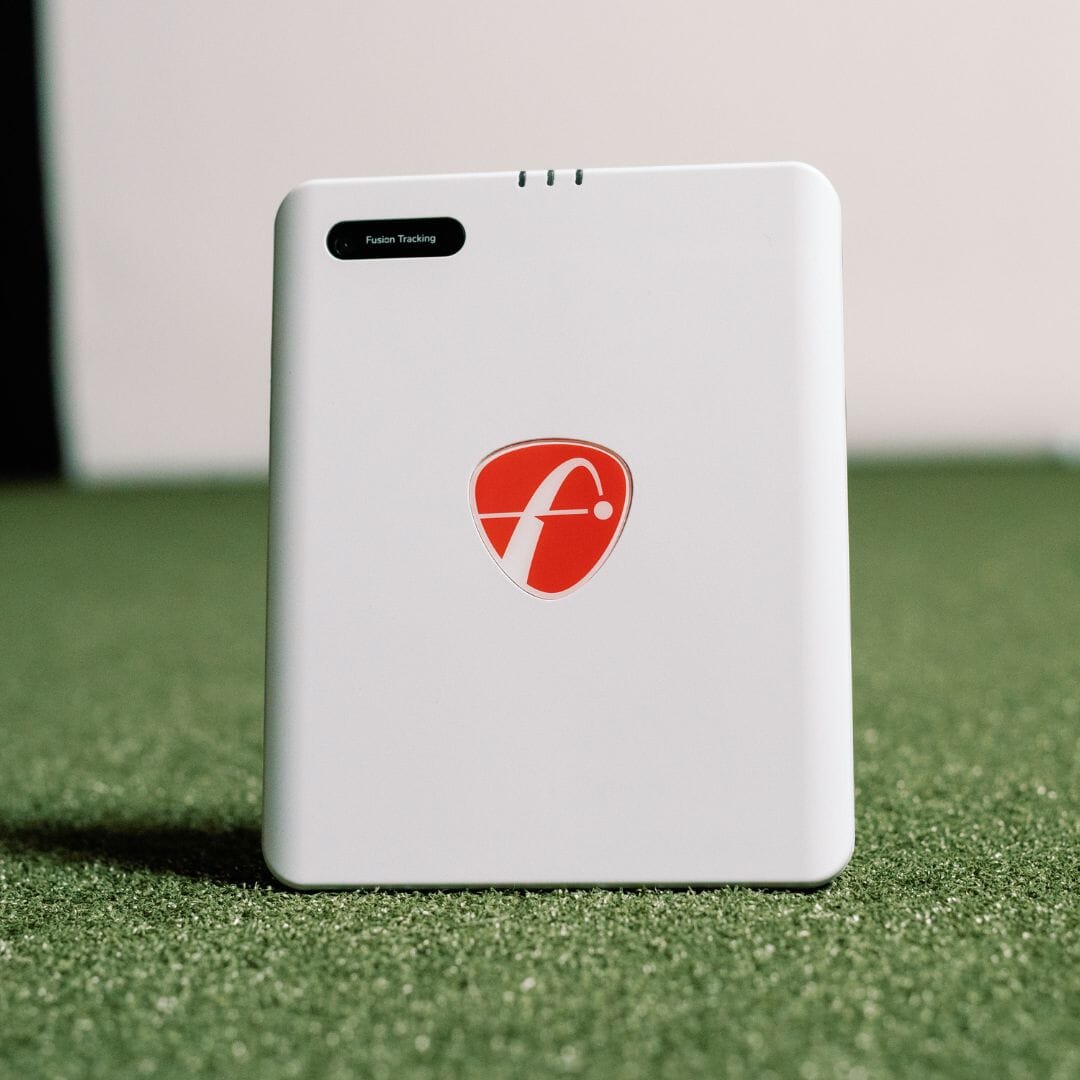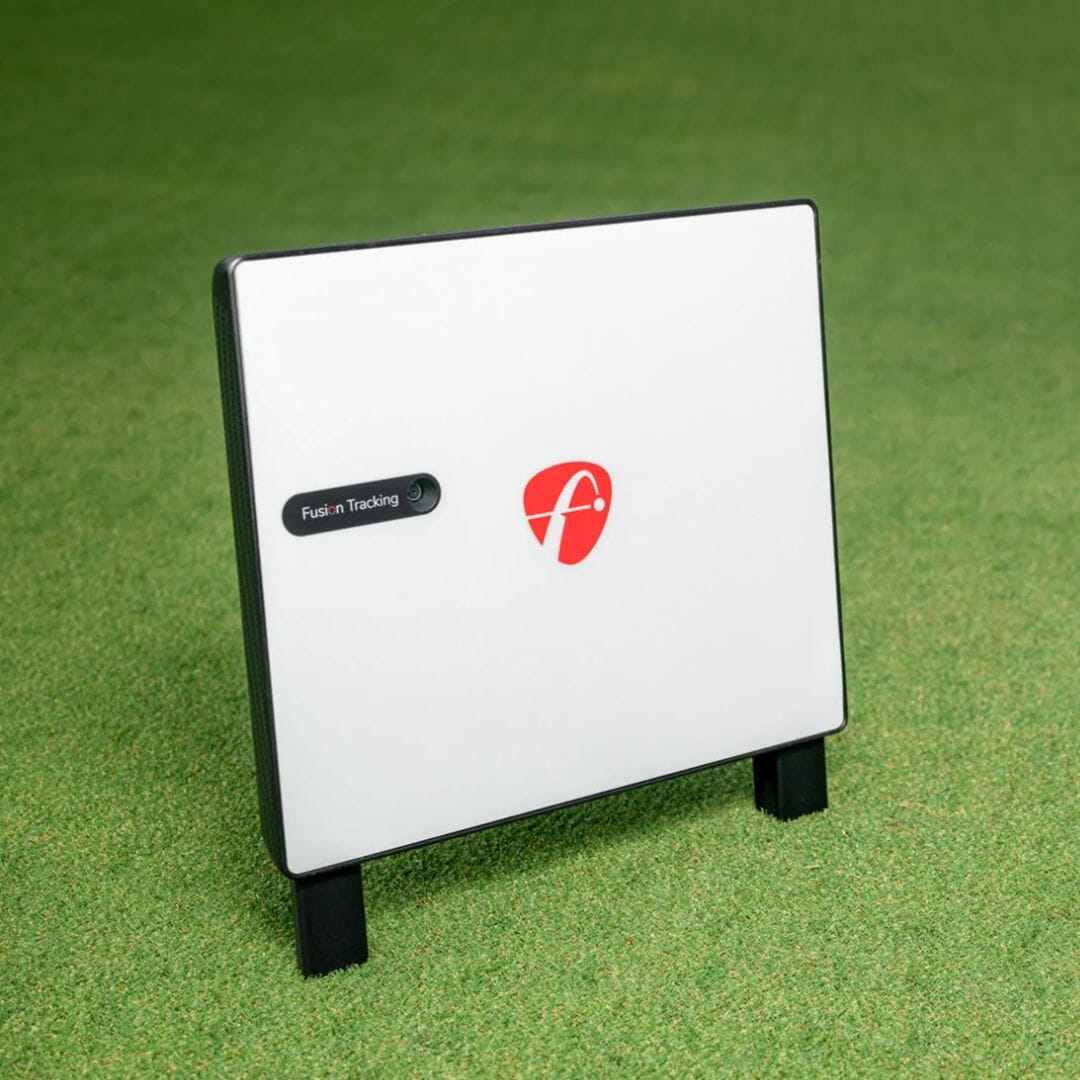
Before Trackman became the brand you see on every tour broadcast, FlightScope was the monitor tour pros and coaches turned to for professional data. The X3 is their flagship radar: full 3D Doppler tracking from impact all the way to ball landing, combined with a high-speed camera for Fusion Tracking at impact. 50 parameters. Used in professional instruction, broadcast coverage, and club fitting. And about $11,000 less than a Trackman 4.
Prices were checked at the time of writing and may change. Check the retailer for current pricing.
This coverage draws on manufacturer specifications, published performance data, and what real owners report from using this unit.
QUICK VERDICT
- Best for: Professional instructors and commercial facilities who want tour-grade radar at a lower price than Trackman
- Key strength: 3D Fusion Tracking with 50 parameters and genuine full ball flight tracking to landing
- Key weakness: Built for semi-permanent professional use rather than casual portability
- Price: ~$14,999
- Bottom line: The closest alternative to Trackman 4 for instruction businesses that want radar depth without the full Trackman price.
Fusion Tracking: Why Radar Plus Camera Matters
Most portable monitors use one sensor type. Camera monitors measure the ball at impact. Radar monitors track the initial ball flight and project carry from there. The X3 uses both simultaneously on every shot.
The 3D Doppler radar tracks the full ball flight from the moment of impact to landing, in three dimensions. That is genuine full flight tracking, not an estimate. The camera adds precision at the impact zone where radar alone is less detailed. Fusion Tracking combines both on every single shot, giving you impact data from the camera and actual flight data from the radar.
The practical difference: most monitors tell you projected carry based on launch conditions. The X3 tracks where the ball actually went. Outdoors, with real distances to work with, that distinction matters for instruction and fitting decisions where you need to know what the ball actually did, not what the physics equations say it should have done.
Specs at a Glance
- Technology: Fusion Tracking: full 3D Doppler radar plus high-speed camera
- Parameters: 50+
- Tracking: Full ball flight from impact to landing
- Mount position: Behind the golfer
- Simulation software: E6 Connect and Creative Golf 3D
- Connectivity: Bluetooth and WiFi
- Use: Indoor and outdoor
- Price: Approximately $9,999
50 Parameters and What You Do With Them
50 parameters is a lot. Most golfers will never look at more than a dozen. What matters is not the number itself but that professional instruction and fitting applications genuinely use that full data set. When a coach is building a detailed swing profile for a competitive player, every club delivery variable and ball flight parameter contributes to the picture. When a fitter is evaluating a shaft through the full range of a player's swing speeds, that breadth of data supports real conclusions.
The 50-parameter data set covers every club metric, every ball flight variable, and landing data. The full 3D flight tracking means landing position is measured, not calculated. For serious instruction and high-performance fitting, that is a meaningful data quality difference.
Indoors vs. Outdoors
The X3's full flight tracking capability is most valuable outdoors, where the ball travels far enough for the actual flight path to diverge meaningfully from projected estimates. Indoors, the ball hits a screen before the radar has a full flight to track, so the indoor performance relies more on the impact zone data from the camera and initial radar readings.
FlightScope built Fusion Radar specifically for indoor performance: the combined radar and camera approach delivers stronger indoor reads than radar-only systems at this level. The X3 functions well indoors with E6 Connect and Creative Golf 3D for simulation use. Its natural strengths, though, are in the outdoor professional instruction and fitting applications where full flight tracking delivers its biggest advantage.
X3 vs. Trackman 4: The Honest Comparison
Both are professional portable monitors with full ball flight tracking and deep parameter sets. The price gap is real: the X3 at around $9,999 versus Trackman 4 at $25,995.
Trackman has the larger installed base in professional instruction, the more recognized brand on tour broadcasts, and a software ecosystem for instruction analytics that is particularly well-developed. If you are running an instruction business that markets Trackman as a differentiator, that brand recognition has value.
The X3 delivers a comparable data set at a significantly lower price. For professional instructors and fitters who want tour-level data without the Trackman premium, the X3 is the serious alternative. For high-performance home simulator golfers who want full flight tracking and 50 parameters at a lower price than Trackman, the X3 covers that.
Who Should Buy the FlightScope X3
Professional instructors who want full 3D ball flight tracking for outdoor range sessions and do not need Trackman's specific brand recognition. Serious club fitters who want the full parameter set with Fusion Tracking accuracy. High-performance home simulator builders who want the top of the portable radar category and find the Trackman 4 price hard to justify for personal use. Facilities that want professional data quality at a lower hardware cost than Trackman.
Skip the X3 if you are a recreational golfer looking for home simulation. E6 Connect is a great platform, and the X3 integrates with it, but the investment is far beyond what recreational simulation use justifies. The Rapsodo MLM2PRO at $699.99 or FlightScope's own Mevo Gen 2 at $1,299 will give a recreational golfer what they need for a fraction of the price.
Pros and Cons
Pros:
- Fusion Tracking: radar and camera combined on every shot
- Genuine full 3D ball flight tracking to landing
- 50+ parameters covering the complete professional data set
- E6 Connect and Creative Golf 3D included
- Bluetooth and WiFi connectivity
- Significantly less expensive than Trackman 4
Cons:
- Full flight tracking advantage is most significant outdoors
- Trackman has stronger brand recognition in some professional markets
- Price is too high for recreational home simulation use
How It Compares
The Trackman 4 at $25,995 is the direct comparison. Trackman uses dual-antenna radar without a camera. The X3 uses Fusion Tracking, combining 3D radar with a camera. Both track full ball flight to landing. Trackman's software platform for instruction analytics, swing benchmarking, and tour data comparison is deeper than FlightScope's. The X3 delivers comparable physical accuracy for about $11,000 less. For facilities where Trackman's specific software is not central to the value proposition, the X3 makes a strong case.
The Foresight GCQuad at $19,999 is the camera alternative. The GCQuad excels at impact data precision, which is why it dominates professional fitting. The X3 excels at outdoor full flight tracking and instruction at the range. Neither is strictly better: they suit different professional applications. For outdoor instruction with real ball flight data, the X3. For high-volume indoor fitting, the GCQuad.
Frequently Asked Questions
What is Fusion Tracking on the FlightScope X3?
Fusion Tracking combines full 3D Doppler radar with a high-speed camera, using both simultaneously on every shot. The radar tracks the complete ball flight from impact to landing in three dimensions. The camera adds precision at the impact zone. The result is a data set that neither technology alone can produce: real flight path data combined with accurate impact measurements.
What does full ball flight tracking mean in practice?
Most launch monitors measure the ball at or immediately after impact and calculate carry distance from those initial conditions. The X3's 3D Doppler radar actually tracks the ball through its entire flight to landing, measuring real flight data rather than projecting it. Outdoors with real distances, this captures actual flight variations including trajectory deviation and landing position that projection-based monitors cannot measure directly.
How does the X3 compare to Trackman 4?
Both are professional monitors with full flight tracking and large parameter sets. Trackman 4 at $25,995 has the deeper instruction software ecosystem and stronger tour-level brand recognition. The X3 at around $9,999 delivers comparable data quality with Fusion Tracking at a significantly lower price. For professional instruction facilities that market Trackman specifically, that brand has value. For everyone else, the X3 delivers equivalent professional data for much less.
What simulation software is included?
E6 Connect and Creative Golf 3D. E6 Connect is one of the most widely used simulation platforms, known for realistic course physics and a large course library. Creative Golf 3D adds additional simulation and game options. Both are well-regarded platforms in the home and commercial simulator space.
Bottom Line
The FlightScope X3 brings Fusion Tracking, 50 parameters, and genuine full 3D ball flight tracking in a portable monitor at around $9,999. It is a professional tool that delivers everything serious instruction, fitting, and high-performance simulation require, and it does so at a price well below Trackman 4.
For professional instructors and fitters who want tour-level data without the Trackman premium, the X3 is the buy. For recreational golfers, the investment is not justified by the use case.